Welcome to Professional Teeth Whitening
Imagine walking into a room perhaps a meeting at work, a family gathering, or a social event and smiling without a second thought. You aren't hiding your teeth behind your hand. You aren't offering a tight-lipped, closed-mouth expression. You are simply smiling. It feels natural, flattering, and unmistakably yours.
Professional teeth whitening is designed to help you reclaim that feeling. We specialize in single-session, clinic-grade whitening treatment that delivers visible, realistic improvements. In the UK, the goal is rarely the blinding, artificial "Hollywood" white often seen on television. Instead, the goal is a healthy, clean, and bright aesthetic that complements your facial features and restores the natural brilliance of your enamel.
This comprehensive guide will help you understand the process, the science behind effective whitening, and what you can realistically expect from a professional treatment. We believe in total transparency. Before you make any decisions about your appearance, you deserve to understand exactly how the technology works, why teeth discolor in the first place, and how safety and comfort are ensured throughout the process.
Quick Facts at a Glance
- Session Duration: Approximately 60 minutes from initial consultation to final reveal
- Typical Improvement: Most clients see a lift of between 5 and 12 shades, though individual results depend on starting shade and mineral density
- Technology Used: Cold blue-spectrum LED activation combined with non-abrasive oxidation chemistry
- Sensitivity Profile: Low to none, using buffered gels and specialized remineralising finish to protect enamel
- Location Standards: Treatments performed in the UK, adhering to high hygiene and safety protocols
- Recovery Time: Zero downtime return to daily activities immediately
- The Look: Natural, restored white that looks clean and healthy, not artificial or opaque
Why Professional Treatment Matters
A smile is often the very first human signal we exchange when we meet someone. It conveys warmth, approachability, and trust. Unlike a handshake or a spoken greeting, a smile is universal. However, when you feel uncomfortable showing your teeth, it affects how others respond to you and, more importantly, how you feel about yourself.
Many small social gestures the quick closed-lip smile at a business meeting, the camera-shy laugh at a wedding, the tendency to turn away when speaking are often rooted in a quiet self-consciousness about tooth colour. This is not about vanity; it is about the freedom to express yourself without inhibition.
The UK Approach to Authenticity
In the UK, we value authenticity. We tend to shy away from cosmetic enhancements that look "done." We want to look like ourselves, just better more rested, healthier, and fresher. Teeth whitening is one of the most effective ways to achieve this "undone" beauty.
When your teeth are bright, the entire face lifts. It provides a contrast that makes the eyes look brighter and the skin look clearer. It suggests health and vitality. Conversely, yellowing or dull teeth can prematurely age a face, regardless of skin quality. By lifting the shade of the enamel, we are not just changing a colour; we are often restoring a youthful vibrancy to the entire facial aesthetic.
How the Treatment Works
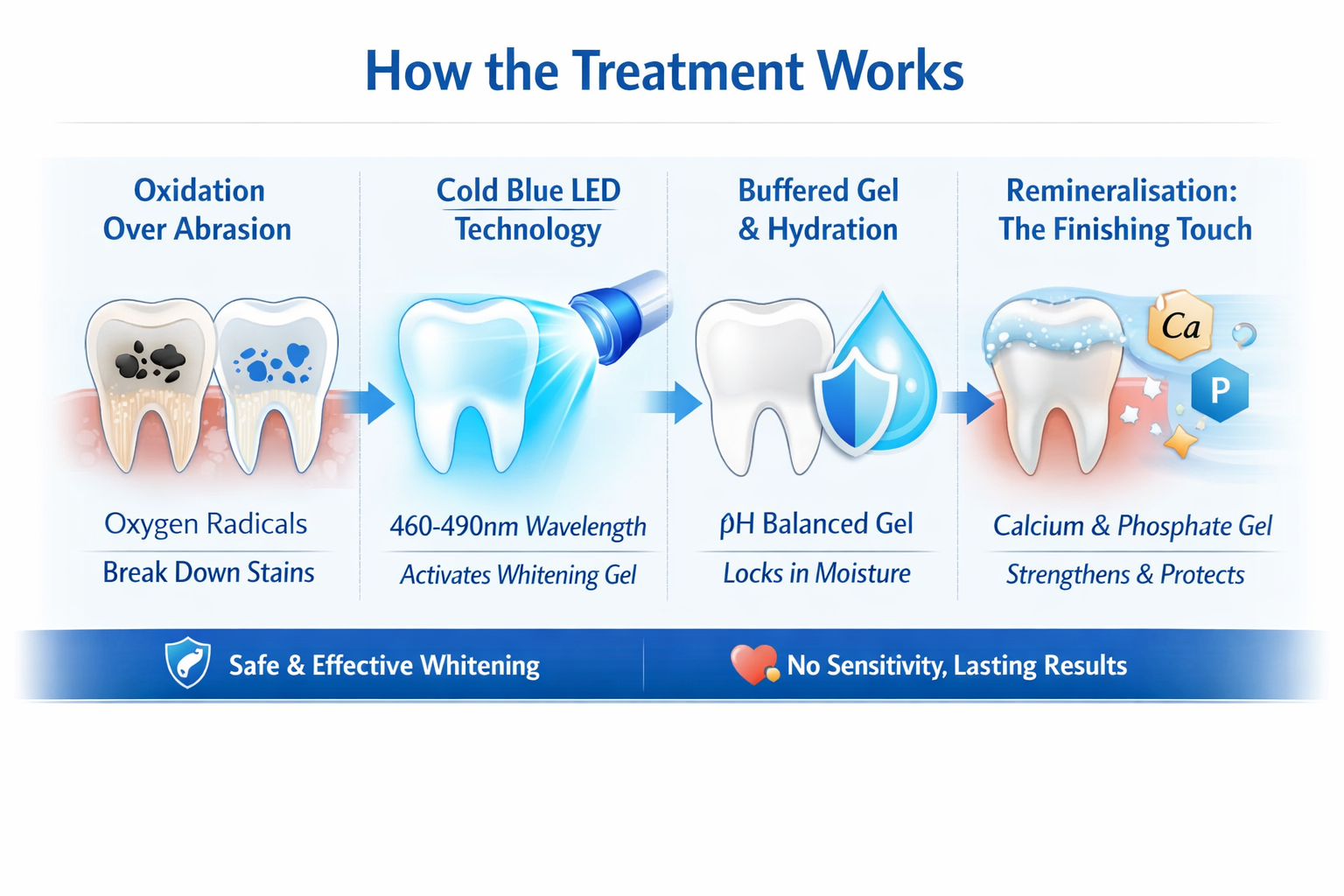
Professional whitening uses a completely different approach from consumer products. Rather than scrubbing teeth, the treatment uses chemistry targeted at intrinsic staining combined with controlled activation technology.
Oxidation Over Abrasion
Professional whitening uses a controlled oxidation reaction to change the molecules that cause colour inside the tooth. The pigment molecules that make teeth look darker are "large" molecules that trap light, appearing dark.
Professional gel contains active ingredients stabilised peroxide formulations that penetrate the enamel pores. When activated, these ingredients release oxygen free radicals. These oxygen radicals attack the carbon bonds of the pigment molecules. By breaking these bonds, the large pigment molecules are shattered into smaller, colourless molecules.
The structure of the tooth remains unchanged. The enamel is not thinned or damaged. The only thing that changes is how light reflects off the tooth. With the dark pigments neutralized, the natural brightness of the tooth shines through.
Cold Blue LED Technology
You may have seen whitening lamps that generate heat. Older systems relied on heat to speed up the chemical reaction. However, heat is a major cause of tooth sensitivity and pulp irritation.
Modern treatments utilize Cold Blue LED technology. This involves high-intensity light in the blue spectrum, specifically between 460 and 490 nanometers. This specific wavelength of light acts as a catalyst for the whitening gel. It excites the molecules in the gel, accelerating the release of oxygen-free radicals without generating thermal energy (heat).
This means a faster result typically in one hour without "cooking" the tooth or causing the intense pain associated with older, heat-based laser whitening systems.
Buffered Gels and Enamel Hydration
A key reason some people experience sensitivity after whitening is enamel dehydration. When the pores of the enamel are open during treatment, the tooth can temporarily lose moisture. To combat this, professional treatments use buffered gel formulas. "Buffered" means the pH level of the gel is balanced to be neutral, preventing it from being too acidic.
Additionally, proper protocol emphasizes hydration. Session time is carefully managed to ensure the teeth do not dry out excessively, which is the primary cause of post-treatment discomfort.
Remineralisation: The Finishing Touch
Remineralisation treatment is not optional; it is a vital step. After the whitening process is complete, the microscopic pores of the enamel are clean but slightly open.
A specialized mineral-packed gel is applied immediately after treatment. This gel is rich in calcium and phosphate. It works to seal micropores, reduce sensitivity, boost shine, and lock in results by closing the pores to help prevent new stains from entering immediately.
Who Is Suitable for Treatment
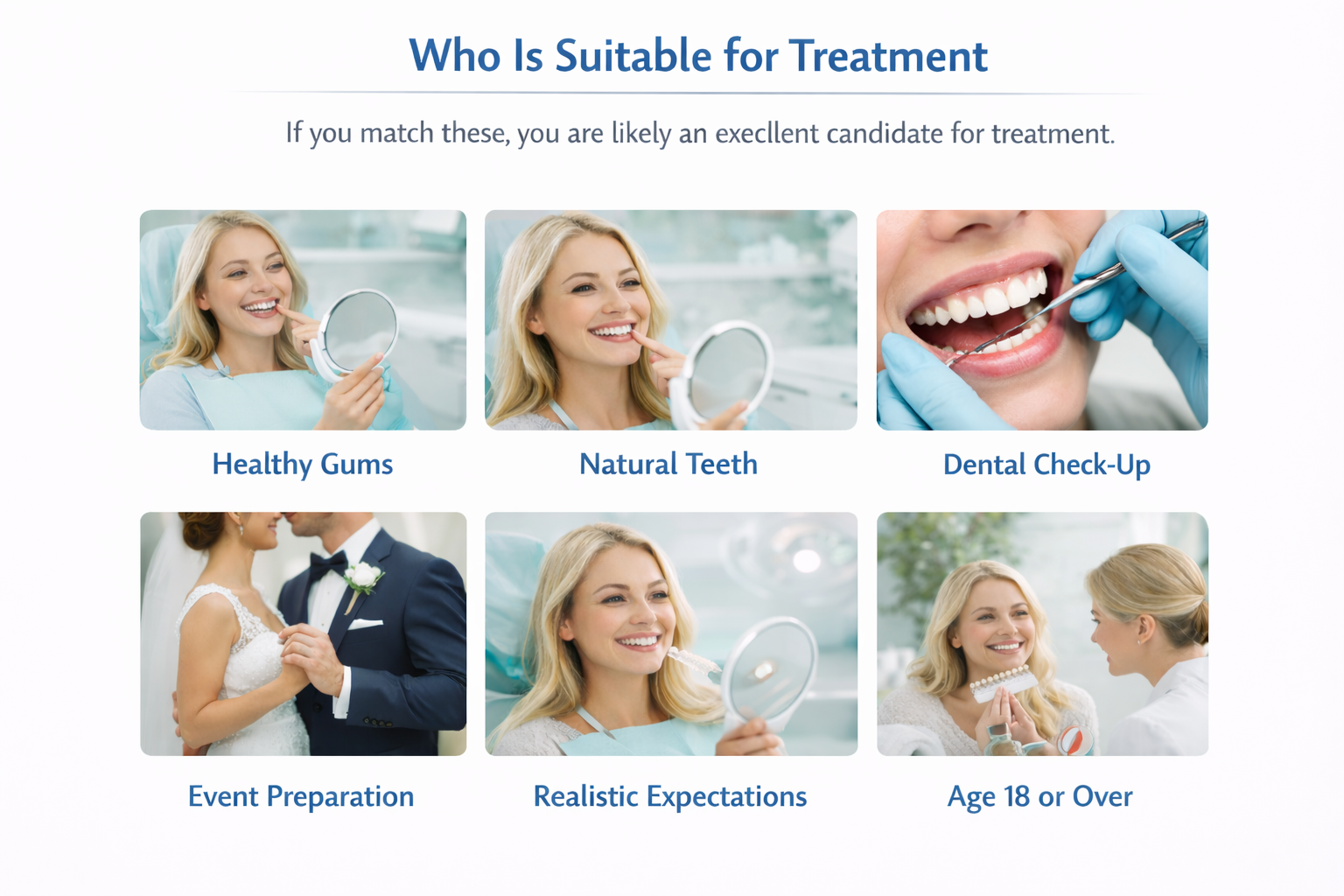
Most adults with healthy enamel and gums are suitable for cosmetic teeth whitening. To help you self-assess, consider the following criteria. If you match these, you are likely an excellent candidate for treatment.
- Healthy gums: Your gums are pink and do not bleed when you brush
- Natural teeth: Your front teeth are mostly natural enamel, not caps or veneers
- Lifestyle-based staining: You drink tea, coffee, wine, or have smoked in the past—these "extrinsic" stains respond best to treatment
- Realistic expectations: You want a clean, natural, bright smile rather than a fake, opaque white
- Event preparation: You are looking for a boost before a wedding, holiday, or interview
- Age 18 or over: Your teeth are fully developed
Who Should Avoid Treatment
There are certain situations where treatment will be declined or delayed for your safety:
- Pregnancy and Breastfeeding: As a strict precautionary policy, treatment is not performed for clients who are pregnant or breastfeeding
- Active Gum Disease: If you have bleeding gums, gingivitis, or periodontitis, it is recommended to see a dentist to stabilize gum health first
- Cavities and Leaking Fillings: If you have an open cavity, whitening gel can penetrate to the nerve, causing pain. These must be filled by a dentist before whitening
- Under 18: Generally, anyone under the age of 18 is not treated, as the pulp (nerve) in young teeth is larger, making them more prone to sensitivity
Important Note on Restorations
Whitening gel only works on natural tooth enamel. It will not change the colour of porcelain crowns, veneers, bonding, or white fillings. If you have a crown on a front tooth, the whitening will lighten your natural teeth, potentially leaving the crown looking darker by comparison. During consultation, any restorations are identified and the best strategy is discussed. Often, clients choose to whiten their natural teeth first and then have their dentist replace old crowns to match the new, brighter shade.
Understanding Tooth Discoloration
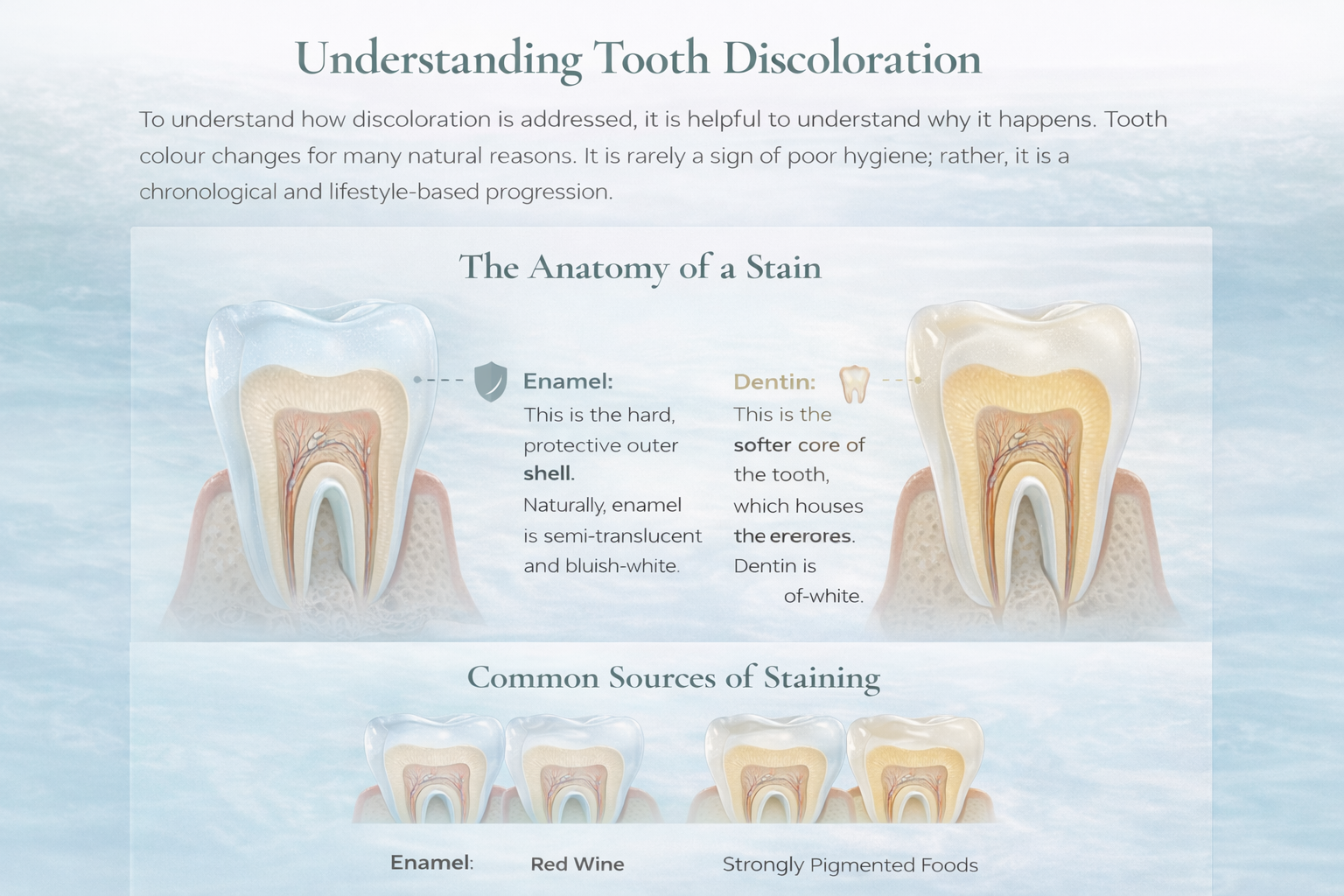
To understand how discoloration is addressed, it is helpful to understand why it happens. Tooth colour changes for many natural reasons. It is rarely a sign of poor hygiene; rather, it is a chronological and lifestyle-based progression.
The Anatomy of a Stain
Teeth are composed of two main layers that contribute to colour: the inner dentin and the outer enamel.
- Enamel: This is the hard, protective outer shell. Naturally, enamel is semi-translucent and bluish-white
- Dentin: This is the softer core of the tooth, which houses the nerves. Dentin is naturally yellow or off-white
As we age, two things happen simultaneously. First, the outer enamel gradually thins due to years of chewing and brushing. As it thins, the naturally yellow dentin beneath becomes more visible. Second, the enamel itself is porous. It has microscopic hexagonal rods that can trap pigments from our diet. Over decades, these pigments accumulate, creating a dull or yellowed appearance.
Common Sources of Staining
Modern life in the UK is filled with dietary habits that accelerate staining. The most common culprits include:
- Tea and Coffee: The most prevalent cause of staining in the UK. Tea, particularly black tea, contains tannins—organic substances that stain enamel at a microscopic level. Coffee, while acidic, also deposits dark pigments into the pores of the teeth
- Red Wine: Contains chromogens—intense colour pigments—that latch onto tooth enamel. The acid in wine also slightly etches the enamel, making it easier for stains to penetrate
- Dark Soft Drinks: Colas and dark sodas contain strong dyes and phosphoric acid. The acid weakens the enamel surface, while the dye darkens it
- Strongly Pigmented Foods: Curries (turmeric), tomato-based sauces, beetroot, soy sauce, and dark berries all contribute to gradual darkening
- Smoking and Vaping: Nicotine and tar create stubborn, brownish-yellow deposits. These are often some of the most difficult stains to remove because they are sticky and penetrate deep into the enamel matrix
Why Common DIY Approaches Fall Short
When people notice this yellowing, their first instinct is often to visit the high street for a solution. While accessible, over-the-counter products often fail to deliver significant results for several reasons:
- Whitening Strips: These can work for very light surface staining, but they often fail to penetrate deep enough to change the intrinsic colour of the tooth. Because they are "one size fits all," the strip often overlaps with the gum tissue, causing irritation or chemical burns, while missing the crevices between teeth
- Charcoal and Abrasive Pastes: A dangerous trend. Many "whitening" toothpastes rely on abrasion. They use gritty particles to scrub the surface of the tooth. While this might remove a superficial coffee stain, it also scrubs away precious enamel. Once enamel is scrubbed away, it does not grow back. Ironically, thinning the enamel makes the yellow dentin show through even more, eventually making teeth look yellower, not whiter
- UV Kits: Many internet-bought kits come with small lights. Often, these lights are not powerful enough to act as a catalyst and serve only a cosmetic function in the kit, without actually accelerating the chemical breakdown of stains
Treatment Options and What to Expect
A streamlined menu of services is designed to fit different needs and schedules. Each package offers professional-grade results with proper safety protocols.
The Signature Single Session
This is the most popular service and the standard for most clients. Perfect for those who want immediate results without a complex commitment.
Includes: Full consultation, shade mapping, gum protection, multi-cycle LED activation, and remineralisation finish
Best For: First-timers, busy professionals, and those with mild to moderate staining
Time: Allow 60 to 75 minutes
The Enhanced Package
Designed for those with deeper, more stubborn staining (such as long-term smokers) or those who want to ensure their results last as long as possible.
Includes: Everything in the Single Session, plus an extended activation cycle for deeper stain removal. Also includes a specialized aftercare kit containing maintenance foam or pen to use at home
Best For: Smokers, heavy coffee drinkers, or clients over 50 (as older enamel can be more stubborn)
Time: Allow 90 minutes
The Event Preparation Strategy
If you are preparing for a wedding or special event, timing is everything. Recommended booking is about 2 to 3 weeks before your big day.
Includes: A consultation to discuss your "target shade," whitening session, specific "White Diet" plan to ensure no restaining occurs before the event, and a top-up strategy to ensure your smile is at peak brightness on your specific date
Best For: Weddings, graduations, photo shoots
Your 60-Minute Journey, Step-by-Step
Each session is designed to feel organized, calm, and professional. It is a cosmetic procedure, but it is treated with clinical rigour. Here is exactly what happens during a standard appointment:
1. Arrival and Consultation (0–10 Minutes)
Upon arrival, you will be greeted and invited to the treatment area. The consultation begins with a discussion about your expectations, dental history, any past sensitivity, and your diet. A shade assessment is performed using a professional dental shade guide to determine your starting point. This provides a baseline so the effectiveness of the treatment can be scientifically measured later.
2. Preparation and Protection (10–20 Minutes)
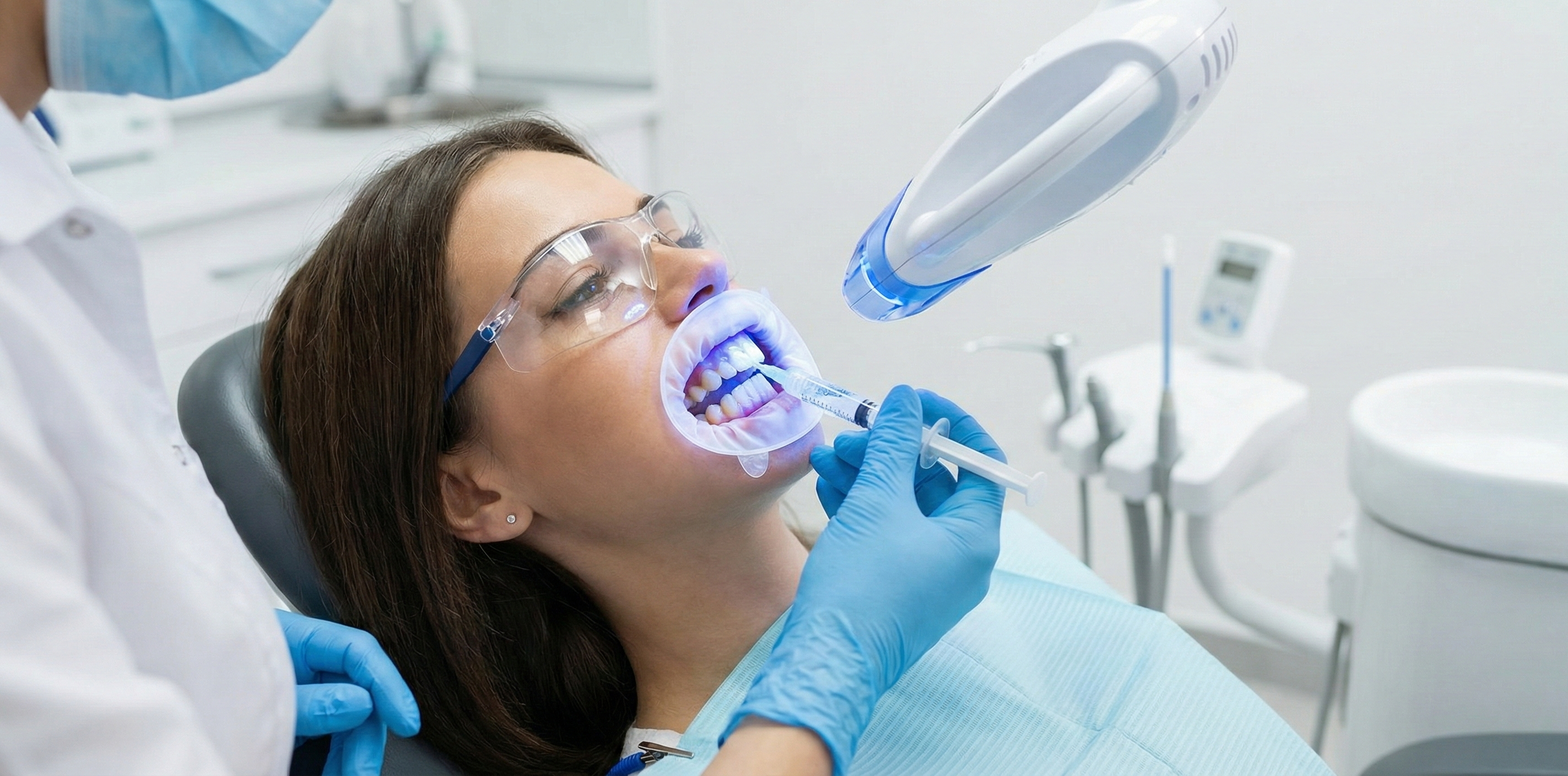
This is the most critical part of the safety protocol. A comfortable cheek retractor is placed in your mouth to keep your lips and cheeks away from your teeth, allowing you to relax. Next, a "gingival barrier" is applied a specialized resin gel that is painted carefully along the gum line, covering the pink gum tissue while leaving the teeth exposed. This barrier is cured with a light, turning it into a soft, rubbery seal, ensuring that the active whitening gel never touches your gums.
3. Gel Application (20–25 Minutes)
Once the gums are fully protected, the clinician applies the professional whitening gel to the visible "smile zone" typically the front 8 to 10 teeth on the top and bottom. The gel is applied with precision brushes to ensure even coverage.
4. LED Activation Cycles (25–50 Minutes)
The Cold Blue LED lamp is positioned in front of your mouth. The light activates the gel. You will sit for an activation cycle, typically lasting 15 to 20 minutes. Depending on your starting shade and sensitivity level, two or three consecutive cycles may be performed. Between cycles, old gel is removed, and fresh, active gel is applied to ensure maximum potency. During this time, you can relax, listen to music, or simply close your eyes.
5. Rinse, Reveal, and Remineralise (50–60 Minutes)
After the final cycle, the gel and protective gum barrier are gently removed. You will rinse your mouth thoroughly. Then comes the reveal you are handed a mirror and your new shade is checked against the guide used at the start. This is the moment where the difference becomes quantifiable. Finally, the remineralising serum is applied, which sits on the teeth for a few minutes to soothe and seal the enamel.
Realistic Results and Expectations
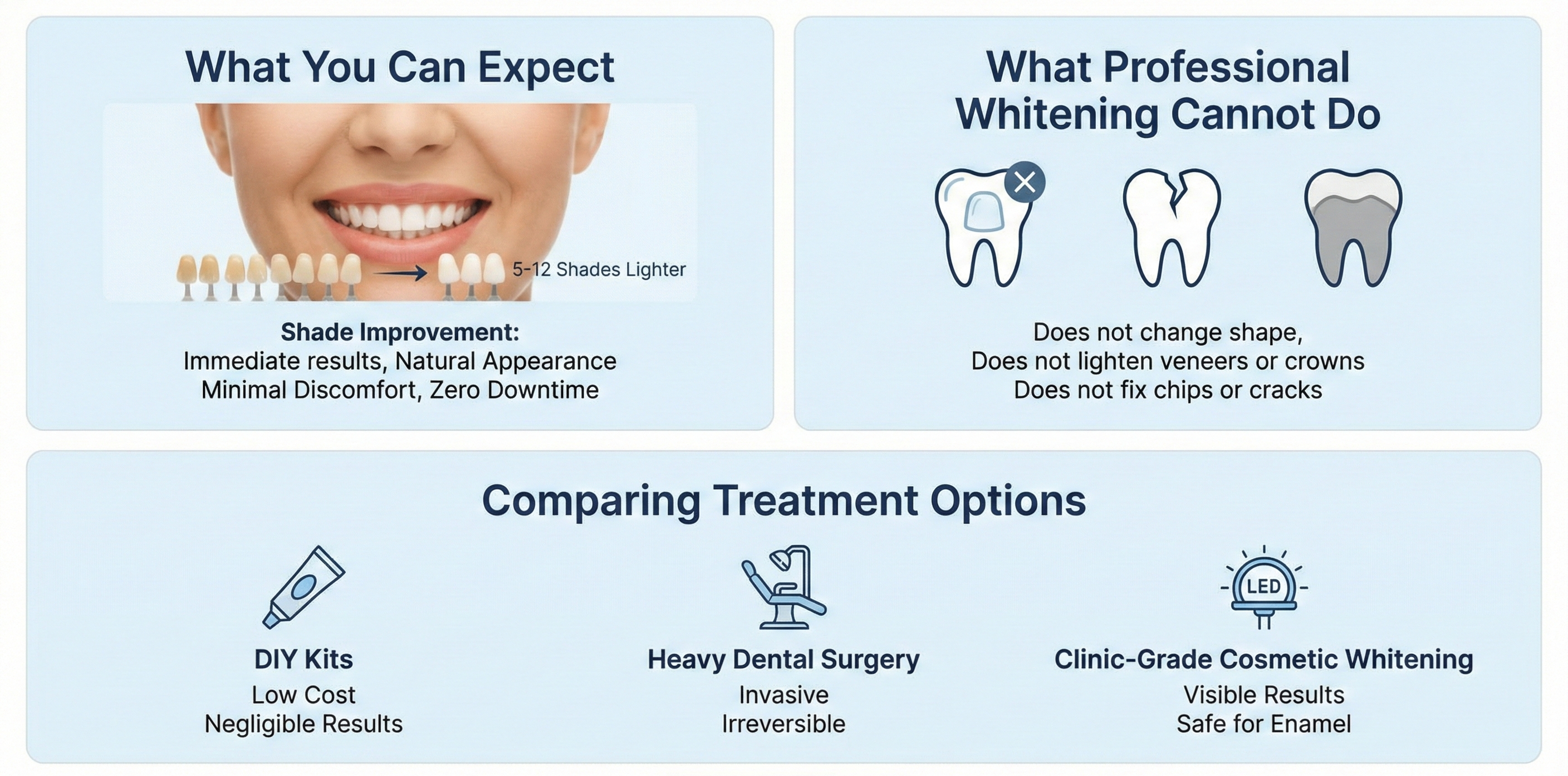
Understanding what professional whitening can and cannot do is essential to being satisfied with your results. Transparency about outcomes is a priority.
What You Can Expect
- Shade Improvement: Most clients see a lift of between 5 and 12 shades, though individual results depend on starting shade and mineral density
- Natural Appearance: The goal is a clean, healthy, bright aesthetic not an artificial "Hollywood" white
- Immediate Results: Visible improvement is seen immediately after treatment
- Minimal Discomfort: Most clients report zero pain during the procedure. Some may experience mild "tingling" or "fizzy" feeling on the teeth, which is normal
- Zero Downtime: You can return to work or daily activities immediately
What Professional Whitening Cannot Do
- It cannot change the shape of the tooth, only the colour
- It will not lighten porcelain crowns, veneers, bonding, or white fillings
- It cannot fix structural issues such as chips, cracks, or gaps
- Results vary based on individual tooth structure and lifestyle factors
Comparing Treatment Options
High Street / Drugstore DIY Kits: Very low cost and accessible, but results are often negligible or take weeks of daily use to notice. High risk of user error putting gel on gums causes burns. Abrasive charcoal pastes can permanently damage enamel. Best for teenagers or those with zero staining, but ineffective for deep or age-related discoloration.
Heavy Dental Surgery (Veneers/Bonding): Involves shaving down the natural tooth and cementing a porcelain cover over it. You can choose any shade you want, regardless of nature. The shape of the tooth can be changed. However, this is invasive, irreversible, and extremely expensive. It requires maintenance for life and often looks "too perfect" or artificial. Necessary for broken or severely misshapen teeth, but overly aggressive for someone who just wants a brighter smile.
Clinic-Grade Cosmetic Whitening: High-concentration oxidation gel activated by professional LED technology, applied by a trained technician. Visible results in one hour. Safe for enamel. Significantly less expensive than veneers. Preserves the natural structure of your tooth. Cannot change the shape of the tooth, only the colour. The best choice for adults who want to enhance their natural assets.
Safety and Professional Standards
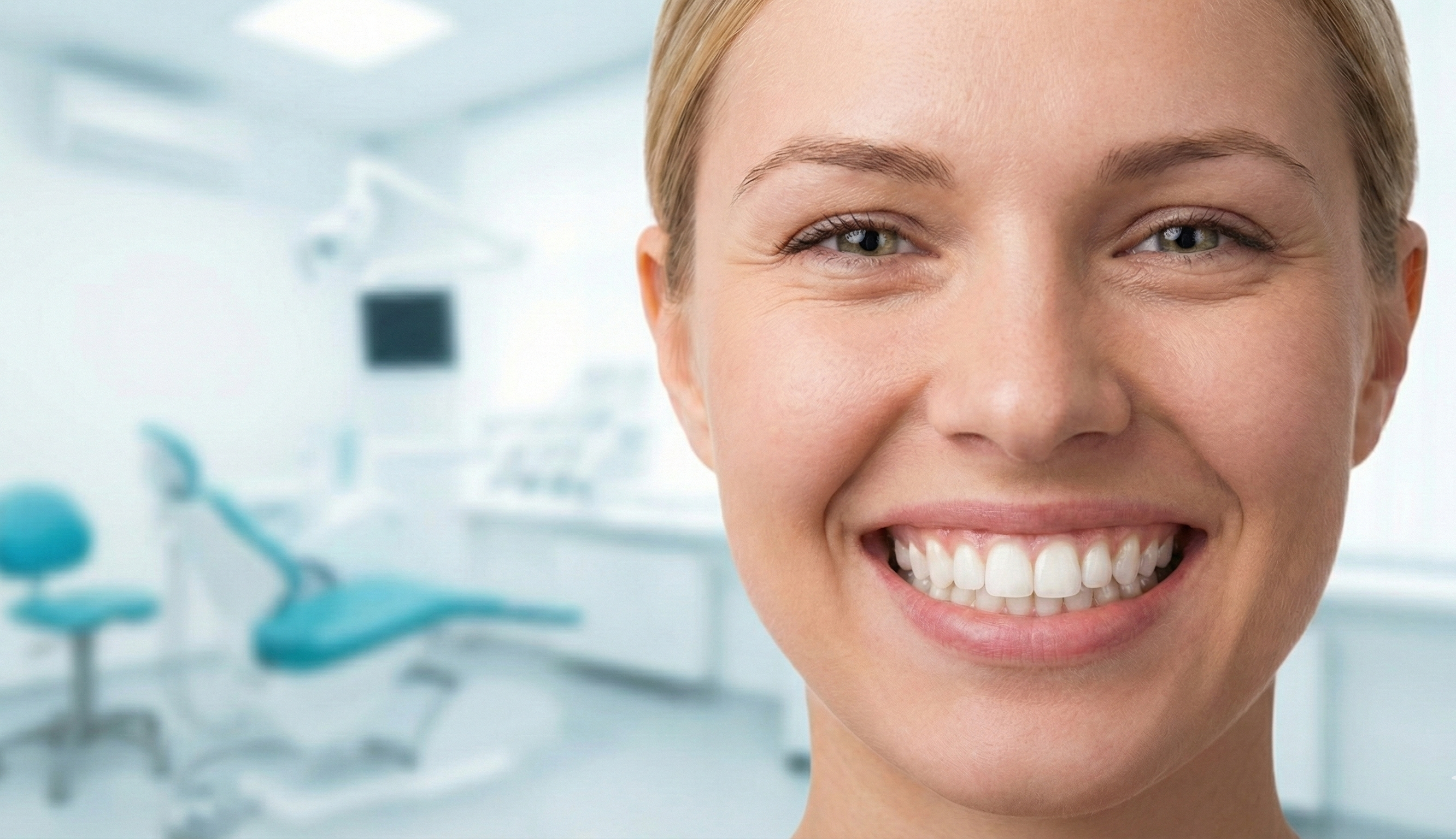
Safety is taken seriously. While teeth whitening is a cosmetic procedure, it involves biological tissues, and it is treated with appropriate caution.
Common Safety Questions Answered
This is the most common question. With older technologies (heat lamps) and high-acid gels, pain was common. With modern cold LED and buffered gel systems, most clients report zero pain during the procedure. Some may experience a mild "tingling" sensation or "fizzy" feeling on the teeth. This is normal.
Minor sensitivity to very cold water or air is possible for 12 to 24 hours after treatment. This is because the pores are temporarily open. The remineralisation step significantly reduces this. If you do feel sensitivity, it is transient and will fade completely within a day.
Yes. Extensive clinical studies have shown that peroxide-based whitening, when used at correct concentrations and durations, does not erode enamel density. It targets the organic pigment molecules trapped within the enamel, not the mineral structure itself.
Professional Standards in the UK
Technicians are trained in the specific application of cosmetic teeth whitening products. Products used are compliant with UK cosmetic regulations. This is cosmetic enhancement, not dentistry. If, during consultation, a dental issue that requires medical attention is spotted (such as an abscess, crack, or decay), an immediate referral to a dentist is made and the whitening procedure is ceased. Health always comes before cosmetic results.
Informed Consent
Informed consent is fundamental. Before treatment begins, you receive a detailed explanation of the risks (mainly sensitivity) and the realistic expectations. There are no over-promises. While it cannot be predicted exactly how many shades you will lift (as every human body is different), a realistic estimate based on experience is provided.
Data Privacy
Your privacy is valued. Any personal information collected during the booking or consultation process is stored securely and used solely for the purpose of your treatment and record-keeping. Data is not sold to third parties. Full compliance with UK GDPR regulations is maintained.
Aftercare and Maintaining Results
The longevity of your whitening results depends largely on how you care for your teeth after treatment. While the initial improvement is immediate, maintaining that brightness requires some attention to daily habits.
The First 24 Hours: The "White Diet"
For the first 24 hours after treatment, the pores in your enamel remain slightly open and are more susceptible to new staining. During this period, it is recommended to follow a "White Diet" avoiding foods and drinks that could restain your teeth.
Avoid:
- Tea, coffee, and red wine
- Dark soft drinks and colas
- Tomato-based sauces and curries
- Dark berries and beetroot
- Soy sauce and balsamic vinegar
- Smoking and vaping
Recommended:
- Water, milk, and clear spirits
- White fish, chicken, and plain rice
- White cheese and yogurt
- White bread and pasta (without dark sauces)
- Bananas, apples, and other light-coloured fruits
Long-Term Maintenance
After the initial 24-hour period, you can return to your normal diet, but being mindful of staining foods and drinks will help prolong your results. Consider drinking tea, coffee, and wine through a straw to minimize contact with your front teeth. Rinsing your mouth with water after consuming staining foods can also help.
Regular dental hygiene brushing twice daily and flossing will keep your teeth healthy and bright. Professional dental cleanings every six months can remove surface stains before they become embedded.
How Long Do Results Last?
Results typically last between 6 months to 2 years, depending on lifestyle factors. Heavy tea, coffee, or wine drinkers, and smokers, may see results fade more quickly. Those who maintain good oral hygiene and limit staining foods often enjoy results for longer periods.
Many clients choose to return for a "top-up" treatment once a year to maintain their smile. These sessions are often shorter than the initial treatment, as the teeth are starting from a brighter baseline.
Frequently Asked Questions
Most clients see a lift of between 5 and 12 shades. The exact result depends on your starting shade, the mineral density of your enamel, and your lifestyle. The goal is a natural, healthy brightness not an artificial white.
Yes, when performed professionally. Extensive clinical studies have shown that peroxide-based whitening, at correct concentrations and durations, does not damage enamel. The treatment targets pigment molecules, not the tooth structure itself.
Some clients experience mild sensitivity to cold water or air for 12 to 24 hours. This is temporary and fades quickly. The remineralisation step significantly reduces the risk of sensitivity.
Whitening gel only works on natural tooth enamel. It will not change the colour of crowns, veneers, bonding, or fillings. If you have restorations on front teeth, your natural teeth will lighten, which may create a colour mismatch. Many clients choose to whiten first, then have their dentist replace old restorations to match the new shade.
Results typically last between 6 months to 2 years, depending on lifestyle. Heavy consumption of tea, coffee, wine, or smoking will cause results to fade more quickly. Good oral hygiene and limiting staining foods help prolong brightness.
You should follow a "White Diet" for the first 24 hours—avoiding dark, staining foods and drinks. After this period, you can return to your normal diet, though being mindful of staining substances will help maintain results.
Professional whitening uses higher concentrations of active ingredients, controlled application by trained technicians, proper safety protocols (gum protection, remineralisation), and advanced LED activation technology. DIY kits often have weak formulations, no professional oversight, and risk of user error that can cause gum burns or uneven results.
There is no upper age limit for teeth whitening, as long as your teeth and gums are healthy. In fact, many clients over 50 find whitening particularly effective for refreshing their appearance and countering age-related yellowing.
Patient Experiences
The best way to understand the impact of teeth whitening is to hear from people who have experienced the treatment. These narratives reflect typical experiences of clients in the UK.
Sarah, 34 – The Coffee Lover
The Problem: Sarah works in a high-pressure marketing role in London. Her daily routine involved three to four cups of black coffee. Over five years, she noticed that her teeth had shifted from a creamy white to a dull, yellowish tone. She stopped wearing bright red lipstick because she felt it highlighted the yellow in her teeth.
The Experience: Sarah was nervous about pain, having had sensitive teeth in the past. The treatment was adjusted to use a slightly lower intensity light cycle but extended the duration. A double layer of desensitising serum was applied.
The Result: Sarah achieved an 8-shade lift. She described the result not as "blindingly white" but as "clean." She reported that her teeth looked like they did when she was 20. She experienced mild tingling for the evening but was back to normal by the next morning. She now drinks her coffee through a straw to maintain the results.
James, 29 – The Groom
The Problem: James was getting married and knew he would be the center of attention. He was self-conscious about a specific darkness near the gum line of his canine teeth (the "eye teeth"), which are naturally darker. He didn't want to look like a reality TV star; he just wanted to match his bride's smile in the photos.
The Experience: James came in for a single session two weeks before the wedding. He found the process relaxing enough to nearly fall asleep during the second cycle.
The Result: The treatment successfully evened out the tone of his smile. The darker canine teeth lifted significantly, blending better with his front teeth. The photos from the wedding showed a bright, happy smile that looked completely natural. He later mentioned that looking at the photos was the first time he didn't zoom in to check his teeth.
Maya, 46 – The Re-entry
The Problem: After raising children and returning to the workforce, Maya felt her appearance looked "tired." She felt her smile had lost its sparkle, contributing to an overall feeling of aging.
The Experience: Maya opted for treatment as a birthday gift to herself. She appreciated the explanation of the science, as she wanted to ensure she wasn't damaging her enamel.
The Result: The psychological impact on Maya was profound. The 7-shade improvement made her entire face look brighter. She reported that colleagues asked if she had changed her hair or been on holiday. It gave her the subtle confidence boost she needed for her interviews.
Our Approach to Patient Care
The philosophy of care is rooted in three core principles: safety, transparency, and respect for your individuality.
Safety First
Every protocol is designed with your safety as the highest priority. From the protective gingival barrier that shields your gums, to the buffered gel formulas that prevent sensitivity, to the remineralisation treatment that seals and protects your enamel every step is deliberate and evidence-based.
If, during consultation, any dental issue is identified that could be compromised by whitening (such as an open cavity or active gum disease), treatment is not performed. Instead, you are referred to a dentist for proper care. Your health matters more than any cosmetic enhancement.
Transparency in Communication
You deserve to know exactly what is happening to your teeth. That is why the consultation includes a detailed explanation of the science, the risks, and the realistic outcomes. There are no hidden fees, no pressure to upgrade, and no exaggerated promises. If the treatment is not likely to give you the result you are hoping for, you are told honestly.
Respect for Your Natural Beauty
The goal is never to make you look "perfect" or to impose a one-size-fits-all standard of beauty. The goal is to help you look like the best version of yourself. That means honouring the natural colour variations in your teeth, respecting the unique characteristics of your smile, and aiming for a result that looks healthy, clean, and authentically yours.
In the UK, we value subtlety. We value enhancements that make you feel confident without making you look "done." Professional whitening embodies this philosophy. It is a gentle, science-based intervention that reveals the natural brightness of your enamel without altering the fundamental character of your smile.
Next Steps and What to Know
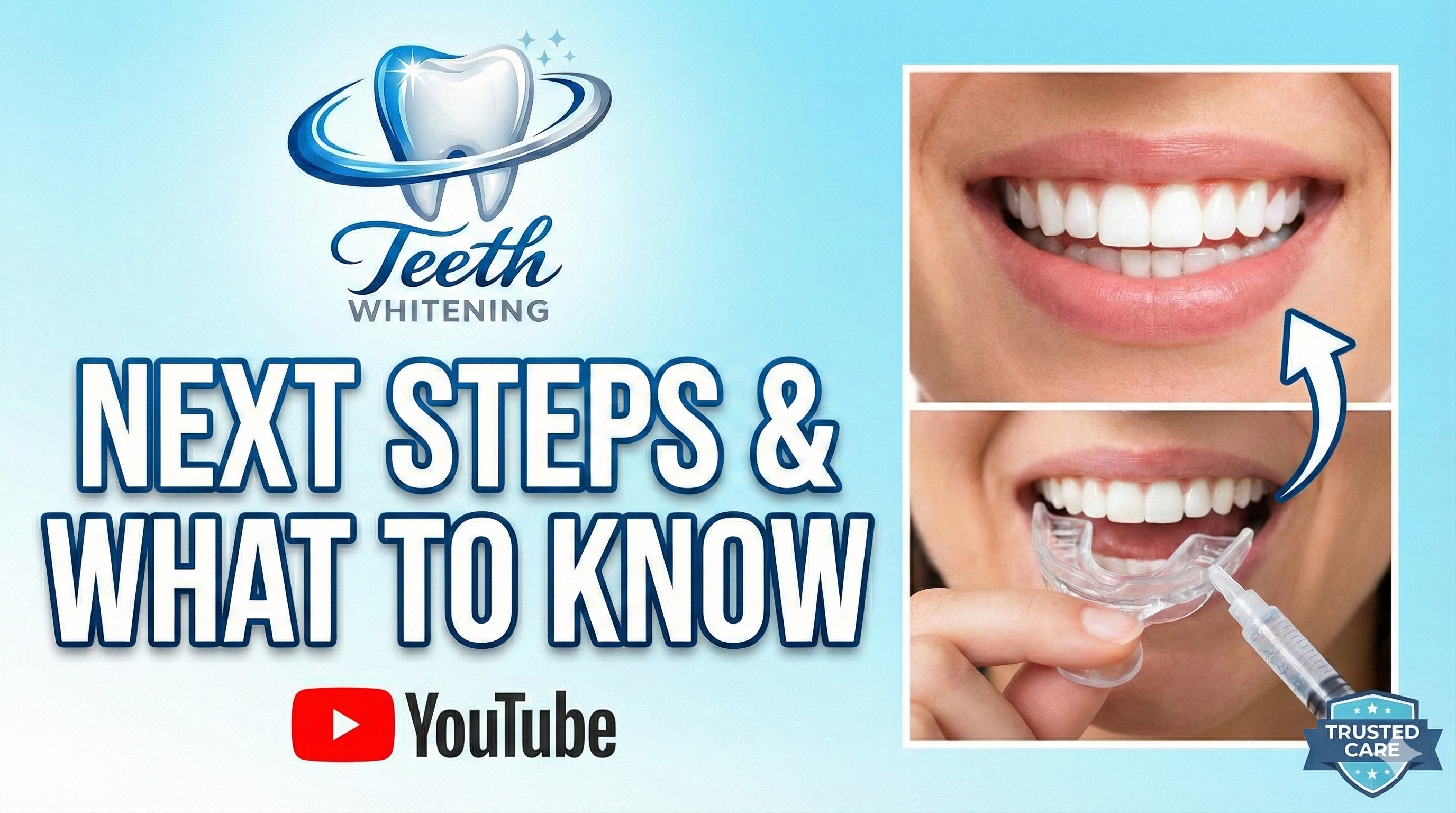
If you are considering professional teeth whitening, understanding what to expect can help you feel prepared and confident.
Before Your Appointment
Ensure your teeth and gums are in good health. If you have not had a dental checkup recently, it is wise to schedule one. Your dentist can identify any cavities, gum disease, or other issues that should be addressed before cosmetic whitening.
If you have sensitive teeth, mention this during your consultation. The treatment can be adjusted (lower intensity, longer duration, extra desensitising serum) to accommodate your needs.
Avoid scheduling your whitening appointment immediately before a major event. It is best to have your treatment 1 to 3 weeks before a wedding, photoshoot, or important occasion. This allows any minor sensitivity to resolve and gives you time to adjust to your new smile.
What to Bring
You do not need to bring anything special. Just arrive on time, with clean teeth (brush and floss before your appointment if possible). If you wear contact lenses, you may want to remove them, as the LED light can be bright (though most clients keep them in without issue).
After Your Appointment
Plan to follow the "White Diet" for 24 hours. This means stocking up on white, non-staining foods and avoiding tea, coffee, wine, and smoking. After this period, you can return to your normal routine, though being mindful of staining habits will help prolong your results.
If you experience any sensitivity, it should fade within a day. Drinking water at room temperature (rather than ice-cold) and avoiding very hot drinks can help during this brief period.
Long-Term Considerations
Think about your long-term goals. If you are a heavy tea or coffee drinker, you might consider switching to lighter brews or using a straw. If you smoke, this is an excellent opportunity to quit not only for your teeth, but for your overall health.
Many clients find that the investment they have made in their smile motivates them to take better care of their teeth. They brush more carefully, floss more regularly, and schedule dental cleanings more consistently. This positive ripple effect is one of the unexpected benefits of professional whitening.
A Simple, Effective Confidence Boost
Teeth whitening is not about vanity or perfection. It is about confidence. It is about removing the barriers that stop you from smiling freely. It is about looking in the mirror and seeing a version of yourself that looks fresher, cleaner, and more vibrant.
The approach is simple: combining the best technology with a human touch. Safety and comfort are prioritized above all else. Science, not abrasion, is used to lift stains and reveal the natural beauty of your enamel.
If you have been hiding your smile, or if you simply feel that your teeth do not reflect how healthy and energetic you feel inside, professional whitening is a safe, effective, and accessible solution. In just one hour, it is possible to turn back the clock on your smile.
This is your opportunity to experience the difference of a professional, clinic-grade treatment. No gimmicks, no false promises just a brighter, happier you.