There's a good chance you've been thinking about teeth whitening for a while now. Maybe you caught yourself in a photo and didn't love how your smile looked back at you. Maybe someone brought it up in passing and it planted a seed. Or maybe you've simply watched your teeth lose a little of their brightness year after year, so slowly that you only really noticed when you held a recent picture up against an older one.
Whatever brought you here, you're probably circling the same question nearly everyone circles before they commit to anything: does it actually work, and will it work on my teeth?
That's what this page is for. Not vague promises or hype — just a clear, honest look at what real results tend to look like, what causes the staining in the first place, what the treatment involves, and what you can genuinely expect afterwards. Take your time with it. The more you understand before you go in, the happier you'll be with what comes out, and by the end you should have a realistic picture of whether teeth whitening is likely to do the job for you — and roughly how much of a difference it could make.
Still Not Sure It Will Work for You?
This is the worry we hear more than any other, and it's a completely fair one. Nobody wants to sit through a treatment and walk away with teeth that look exactly the same as when they arrived.
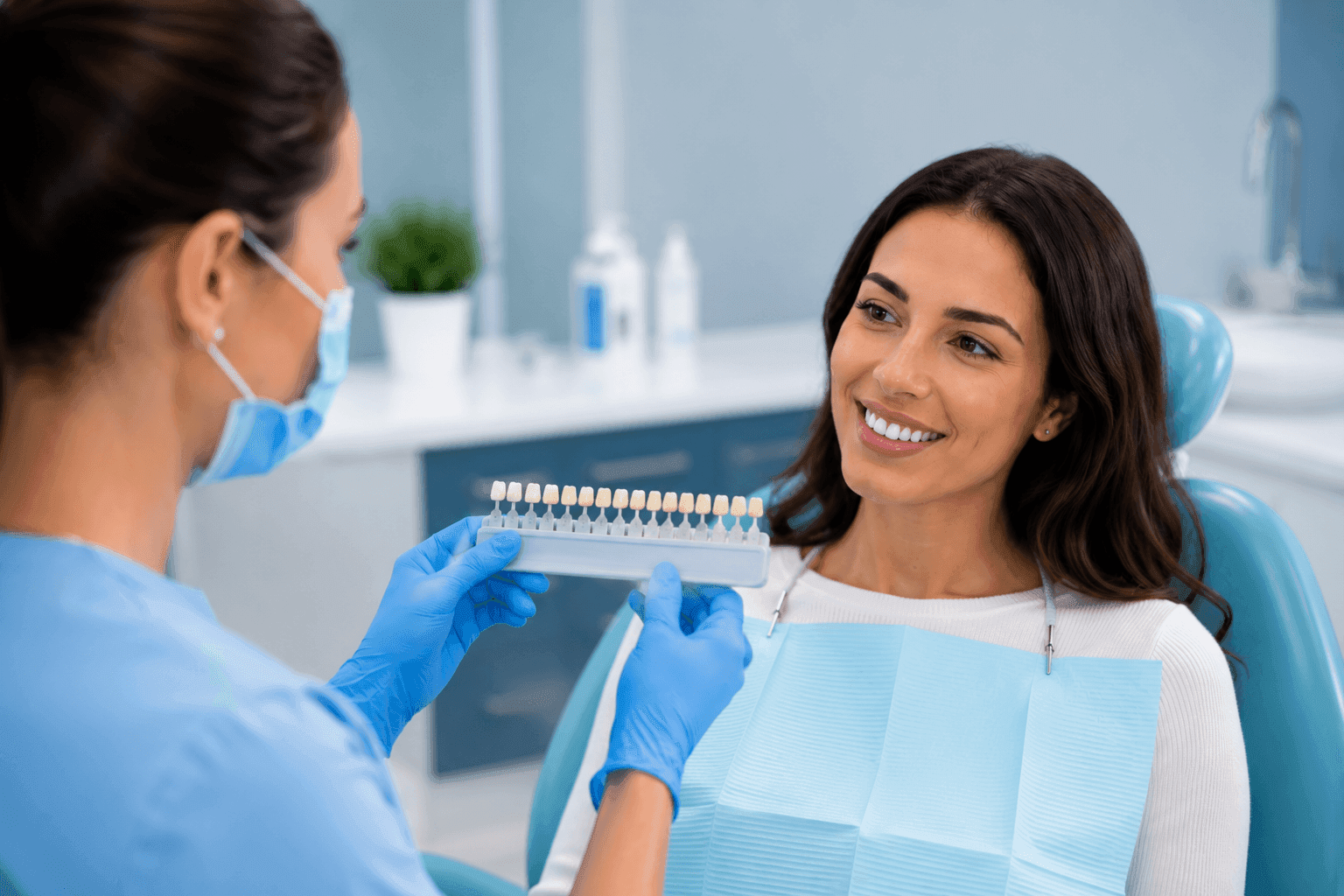
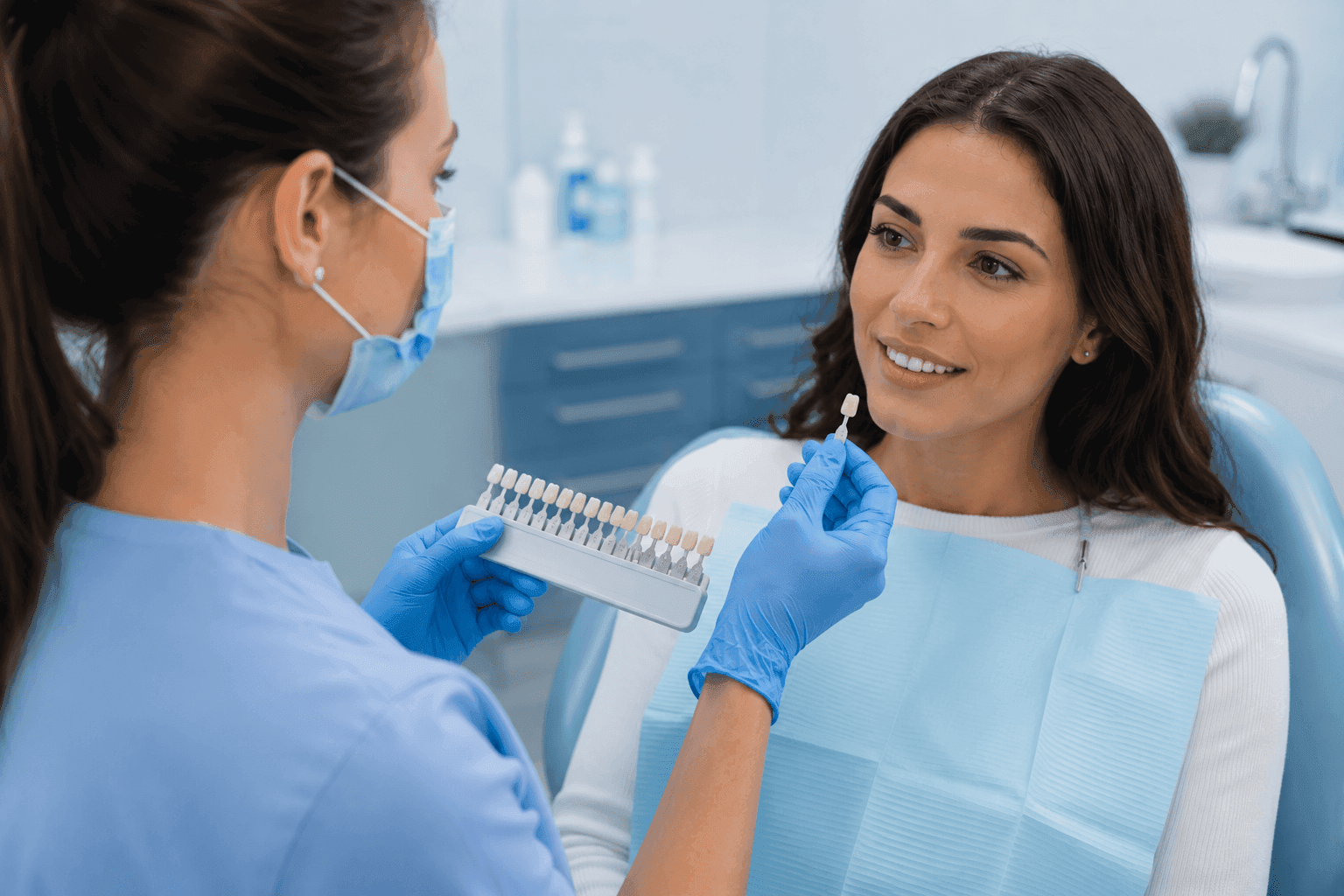
Here's the part that puts most people's minds at ease. Before anything begins, your teeth are matched against a standard dental shade guide — the same kind of reference dentists use every day. It's a physical row of tooth shades lined up from dark to light, and your starting point gets recorded against it. At the end of the session, you're matched again. That means you're never left squinting at the mirror wondering whether anything actually changed. You can see it, side by side, on a scale that isn't open to wishful thinking.
Most people shift somewhere between four and twelve shades lighter in a single session. Where you land depends on a few things: where you started, what caused your staining, and how your particular teeth respond. Everyone's a little different, and that's completely normal. Someone carrying years of deep coffee and tobacco staining often sees a dramatic jump, simply because there's so much more to lift. Someone whose teeth were only slightly dull to begin with might see a gentler shift — not because the treatment underperformed, but because they didn't have as far to travel in the first place.
The important thing to hold onto is this: the improvement isn't a matter of opinion, and it isn't a trick of flattering lighting. It's measured. And for the overwhelming majority of people, the difference is plain to see the moment they look in the mirror — often with a slightly surprised expression, because they'd half-forgotten their teeth could look that way.
A Closer Look at What Causes Teeth to Stain
It's worth understanding why teeth lose their brightness in the first place, because it explains both why whitening works and why some people need it more than others.
The everyday staining most of us deal with comes from pigments in the things we eat, drink, and do. Every cup of coffee, every mug of tea, every glass of red wine leaves behind tiny coloured particles that cling to the surface of the enamel. On their own, one cup won't do much. But multiply that by years of daily habits and the build-up becomes noticeable — a gradual dulling that creeps in so quietly you never catch it happening.
Tea is a particularly sneaky culprit. A lot of people assume coffee is the worst offender, but strong tea is loaded with tannins too, and heavy tea drinkers often carry more staining than they'd ever expect. Red wine combines dark pigment with acidity, which is a double blow — the acid softens the enamel slightly, making it easier for the colour to take hold. Tobacco, whether smoked or chewed, is in a league of its own for stubbornness, leaving behind deep yellow and brown tones that ordinary brushing simply can't shift.
Then there are the less obvious contributors. Richly coloured foods — curries, tomato-based sauces, soy sauce, balsamic vinegar, dark berries, beetroot — all leave their mark over time. Even things that seem harmless, like fizzy drinks and certain fruit juices, are acidic enough to make staining worse than you'd think.
On top of all that, there's age. Enamel naturally thins as the years pass, and beneath it sits a naturally yellower layer called dentine. As the enamel wears down, more of that darker layer shows through, which is why teeth tend to look duller in our forties and fifties than they did in our twenties — even for people who've never touched coffee or a cigarette in their lives.
Genetics play a part too. Some people are simply born with brighter or thicker enamel than others, which is why two people with near-identical habits can end up with quite different-looking smiles.
Understanding Why Some Results Are More Dramatic Than Others
This leads neatly into why one person walks out with a jaw-dropping change and another sees something more modest. Most everyday discolouration is surface staining, and that's exactly what whitening is so good at lifting — which is why heavy coffee drinkers and smokers often see the biggest transformations, simply because there's more there to remove. The deeper kind of discolouration that comes from within the tooth, tied to age or occasionally certain medications taken years ago, doesn't always respond as fully, and that's an honest reality worth knowing before you start. Most people fall somewhere in the middle, with plenty of liftable staining and a result that genuinely surprises them.
What the Before and After Results Actually Show
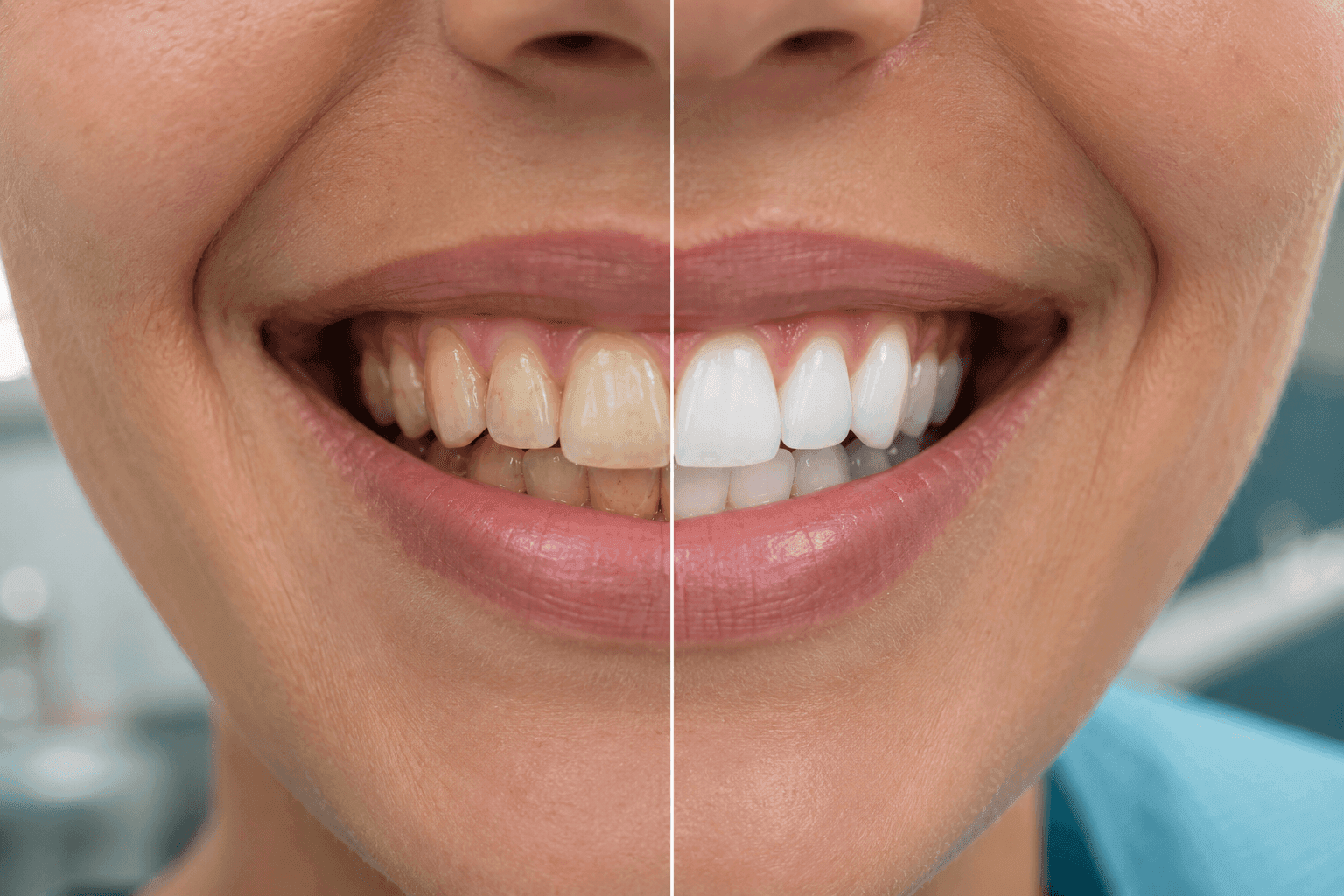
Photos tell this story far better than words can, but let me describe what you'll usually notice when you look at a proper set of results.
In the "before" shots, you tend to see the things people have grown so used to that they've stopped noticing them on themselves — a yellowish or slightly greyish cast, patches where staining has settled unevenly, that faintly tired look teeth pick up over the years. Day to day you'd never clock it. In a photograph, it's the first thing your eye goes to.
In the "after" shots, the teeth look brighter and, just as importantly, more even. The colour lifts across the whole smile rather than in scattered spots. And here's something worth underlining: good whitening doesn't leave you with a fake, blindingly white result that looks like it belongs on a billboard. It brings your teeth back to a natural, healthy white — much closer to the shade they probably were years ago, before life and a few thousand cups of coffee got involved.
Sit with a few of these for a moment and you'll start to notice the same pattern repeating. The change is real and it's obvious, but it still looks like your smile. Just a fresher, brighter version of it. That's the sweet spot, and it's what separates a natural result from an overdone one. When people worry about whitening, it's usually this — that they'll end up looking artificial — and it's exactly what a good result avoids.
Real Situations Where Whitening Made a Difference
Numbers and shade guides are useful, but sometimes it helps to picture the actual people who decide to whiten their teeth. Chances are you'll recognise a bit of yourself in at least one of them.
There's the bride-to-be, months out from her wedding, who's suddenly hyper-aware that every photograph from the day will hang on a wall for decades. She isn't looking for a transformation — just to feel like the best version of herself when it matters most.
There's the teacher who drinks coffee like it's a survival tactic, cup after cup through a long day, and who slowly realised over the years that her smile had dimmed without her ever deciding to let it. She'd tried whitening toothpaste, seen almost nothing, and quietly assumed that was that.
There's the man who quit smoking a couple of years ago and did every hard thing to get there, but was left with the stubborn staining as a daily reminder of a habit he'd rather forget. Lifting it felt like closing the final chapter.
And there's the retiree who set a recent holiday photo beside one from twenty years earlier and was quietly startled by the difference. Nothing dramatic had happened — just two decades of tea, the odd glass of wine, and enamel doing what enamel does. He simply wanted to look a little more like he still felt.
What ties all of these together isn't vanity. It's a small, understandable wish to feel good about something you show the world dozens of times a day, often without thinking. Teeth whitening tends to deliver on exactly that — not by changing who you are, but by giving you one less thing to feel self-conscious about.
Why People Decide to Whiten Their Teeth
Step back from the individual stories and the reasons tend to fall into a few familiar camps: plain confidence in everyday moments, an event on the horizon like a wedding, a milestone birthday, or a round of professional headshots, or simply the wish to turn the clock back a touch and recover brightness that faded so gradually it was never really noticed. When you're happy with your smile you use it more freely; when you're self-conscious about it you catch yourself doing the closed-mouth half-smile or angling away from the camera. No single reason is more valid than another. Wanting to feel good about your own smile is reason enough on its own.
How the Treatment Actually Works
If you've never had it done, the whole thing can sound more mysterious than it really is. So here's the plain, step-by-step version of what happens.
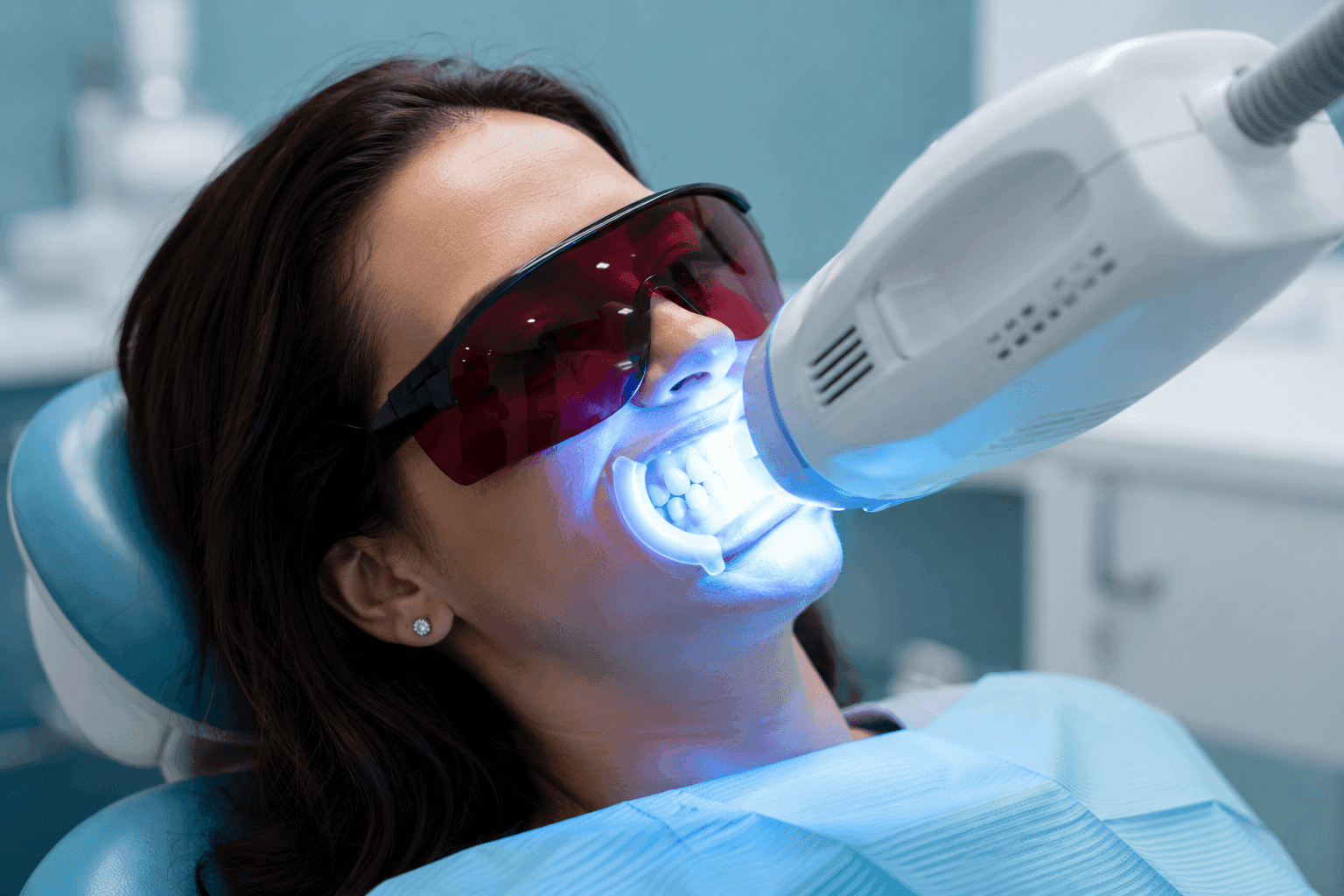
The full session takes around an hour. You sit back — comfortably, this isn't an ordeal — and a whitening gel is carefully applied to your teeth. A specially calibrated light is then used to activate that gel, and that's where the actual whitening happens. The gel gets to work lifting the stains that have built up on and within the enamel over time. Once the session's done, you'll usually see the result straight away rather than waiting days for it to develop.
A quick word on the "laser" part, because it trips up a lot of people and puts some off before they've even started. The light isn't a harsh, burning laser like something out of a science-fiction film. It's a cool, low-heat light designed for one specific job: activating the gel safely. Non-invasive means exactly what it sounds like — nothing is drilled, cut, filed, or damaged. The light and the gel do the work together, gently, while you relax.
People often ask what it actually feels like. For most, it's comfortable and fairly uneventful — some describe it as a bit boring, which is honestly a good sign. You might notice a little sensitivity during the session or shortly afterwards, particularly if your teeth were already on the sensitive side, but it's usually mild and passes quickly. Treatments are generally designed with sensitive teeth in mind, so it's always worth flagging any concerns beforehand so everything can be adjusted to suit you rather than run to a rigid template.
What a Typical Appointment Feels Like, Start to Finish
If it helps to walk through it moment by moment, here's roughly how a whitening appointment tends to unfold.
You arrive and settle in. Before anything happens, there's usually a quick chat about your teeth — any sensitivity you've had, any dental work you're aware of, and what you're hoping to achieve. This is the moment to mention anything that's been on your mind, because it lets the treatment be tailored to you rather than applied off a checklist.
Next comes the shade match. Your starting shade is recorded against the guide, and this is genuinely one of the most useful parts of the whole process — it's your baseline, the thing every result gets measured against later. A lot of people are quietly surprised at how dark their starting point actually is, simply because they've never seen it laid out on a scale before.
Then your lips and gums are gently protected so the gel stays where it's meant to be, on the teeth themselves. The whitening gel goes on, the light is positioned, and then — this is the anticlimactic bit — you mostly just relax. You might listen to something, close your eyes, or let your mind wander. The gel and light do their work in the background over the course of the session, often across a few rounds.
When it's finished, everything is cleaned off and you're matched against the shade guide one more time. Seeing your new shade sitting several steps lighter than your starting point, right there in front of you, tends to be far more convincing than any before-and-after photo of a stranger. You walk out with a brighter smile the same day — no lengthy recovery, no waiting days to find out whether it worked. The only thing to be mindful of is what you eat and drink for the first day or two, which we'll come to shortly.
Who Gets the Most Out of Teeth Whitening
Certain kinds of staining respond particularly well, and if you recognise yourself in any of the descriptions below, that's a promising sign.
If you smoke, or used to. Tobacco is one of the most stubborn stainers there is, and years of it can leave teeth looking deeply yellow or even brownish. Because there's so much surface staining to lift, smokers and ex-smokers often see some of the most dramatic before-and-after changes of anyone. If you've quietly written your teeth off as a lost cause, you may be genuinely surprised by what a session can do.
If coffee or tea is basically its own food group for you. Both are wonderful. Both stain. Every cup leaves a little tannin behind, and over the years that quietly adds up to a noticeable dullness that creeps in so slowly you never catch it happening. If you're getting through several a day, there's a very strong chance whitening will make a visible difference.
If you enjoy a glass of red. Red wine is notorious for it — the same deep, rich colour that makes it a pleasure to drink is precisely the thing that clings to your enamel afterwards. Regular red-wine drinkers often carry far more staining than they realise, right up until the moment they see the after photo.
If your teeth have simply dulled with age. Sometimes there's no single dramatic culprit at all. Enamel naturally thins and darkens over time, and the bright white of your twenties fades so gradually you don't register the loss. Whitening is a straightforward way to recover a good deal of that lost brightness.
Here's a useful thing to know: if more than one of those describes you — say you're a coffee drinker who enjoys the odd cigarette and a glass of red at the weekend — the staining tends to stack up, and so does the visible improvement when it's lifted.
Professional Whitening Versus What You Can Do at Home
People often ask why they'd have it done professionally when the shelves are full of strips, pens, and kits. It's a fair question, and the honest answer is that at-home options do have their place — they can help maintain a result or make a small difference to light staining.
Where professional treatment tends to pull ahead is in strength, control, and speed. The gel used is more effective, the light activates it properly, and the whole thing is carried out in a controlled way by someone who does this all day. That's why a single professional session so often achieves in an hour what a home kit might chip away at for weeks with more modest results. It's also why the improvement shows up clearly on the shade guide rather than leaving you squinting at the mirror wondering if anything really changed.
There's also the matter of evenness. Home strips don't always sit neatly against every tooth, which can leave patchy results — brighter in some spots than others — whereas a professional application treats the whole smile evenly. This isn't about knocking home products; it's about setting a realistic expectation. If you want a noticeable, measurable change in one sitting, professional whitening is generally the route that gets you there.
Managing Sensitivity
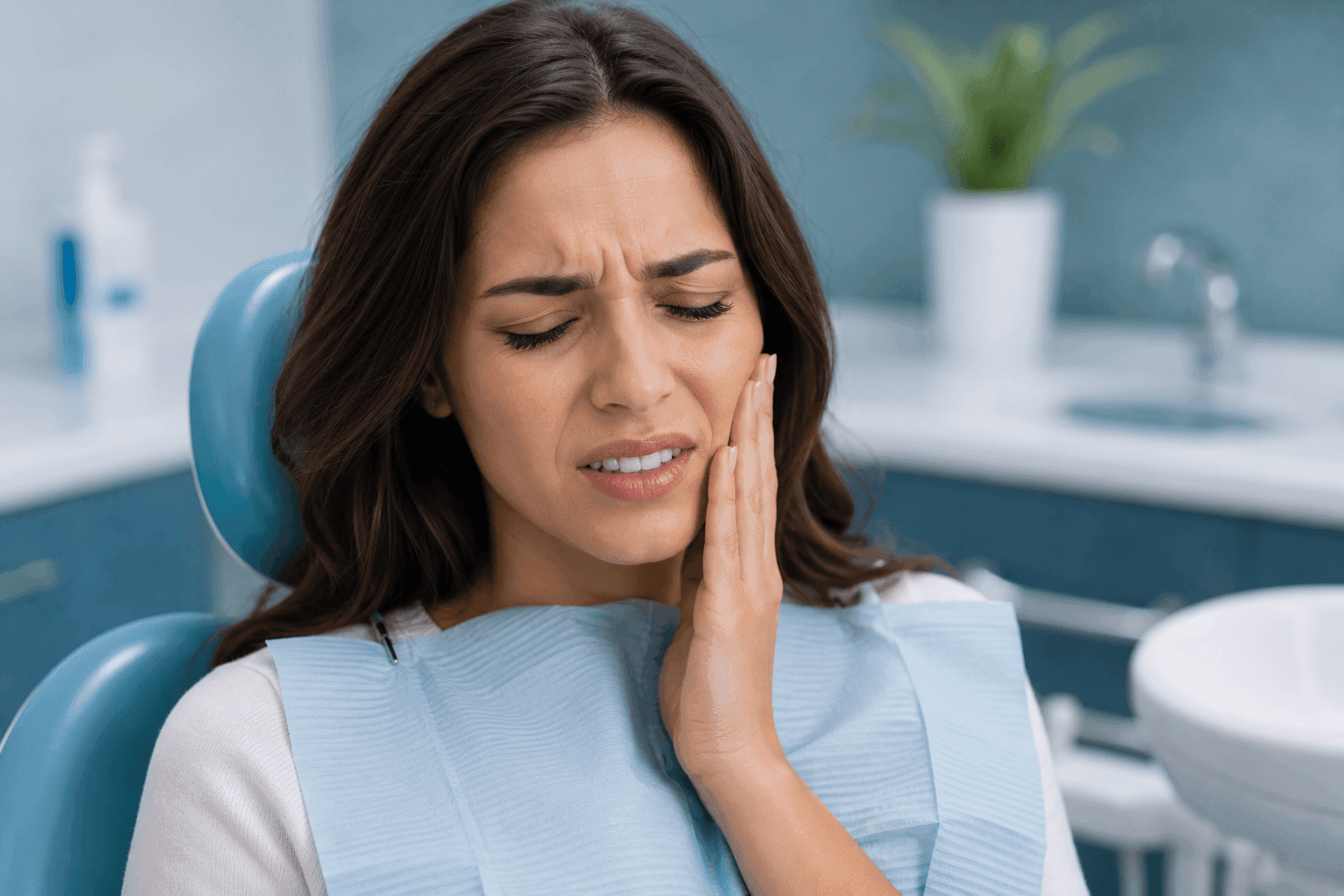
Sensitivity is the thing people fret about most, so it's worth being straight about it.
Some people experience a bit of tooth sensitivity during or shortly after whitening. It tends to show up as a brief, sharp twinge — often when eating or drinking something cold — and for the vast majority it's mild and short-lived, settling down within a day or so. It's a normal, temporary response, not a sign that anything has gone wrong. It's usually people whose teeth were already on the sensitive side who feel it most, so if cold drinks or ice cream already make you wince from time to time, there's a reasonable chance you'll notice a little more of it afterwards than someone with hardier teeth would.
The good news is that it's very manageable. Mentioning any history of sensitivity before your session matters, because the treatment can often be approached with that in mind. In the day or two afterwards, sticking to lukewarm food and drink rather than anything piping hot or ice cold gives your teeth an easier ride, and a toothpaste made for sensitive teeth can take the edge off for those who are prone to it. What sensitivity doesn't mean is that whitening is damaging your teeth — a properly delivered treatment works on the staining, not on the healthy structure of the tooth, and any tenderness is a passing reaction rather than lasting harm.
What to Expect Afterwards
One of the most satisfying things about the treatment is that the results are there to see the same day. You don't leave with a promise of a brighter smile arriving later in the week — you leave with the brighter smile itself.
The finish looks natural rather than artificial, which is exactly what you want. It should read as healthy, well-cared-for teeth, not as something that draws attention for the wrong reasons or makes people wonder what you've had done.
How long it holds up depends largely on you. The same habits that caused the staining in the first place — coffee, tea, red wine, tobacco — will gradually bring it back if you carry on exactly as before. That doesn't mean you have to give anything up or overhaul your whole life. It just helps to be a little mindful, and there are some simple habits, covered just below, that make your results last considerably longer.
The First 48 Hours: Giving Your Result the Best Start
The day or two right after whitening matters more than people expect. Freshly whitened teeth are briefly more receptive to picking up colour, so what you eat and drink in that short window can make a real difference to how long your result holds.
The simple rule of thumb is to think pale. For the first couple of days, lean towards foods and drinks that are light in colour and easy on the teeth — chicken, fish, rice, pasta with a light sauce, plain yoghurt, bananas, potatoes, bread, cheese, and plenty of water. It's sometimes called a "white diet," and while it isn't the most exciting menu you'll ever eat, it's only for a short stretch.
Just as usefully, here's what to go easy on in those first 48 hours: coffee, tea, red wine, cola, dark fruit juices, curries, tomato-based sauces, soy sauce, balsamic vinegar, berries, beetroot, and anything else with a deep, staining colour. If you can picture it leaving a mark on a white shirt, it's best kept off the plate for a day or two. Tobacco is worth avoiding in this window if you possibly can, since it's such an aggressive stainer and your teeth are at their most vulnerable to it right after treatment.
If you do slip up — life happens — rinsing with water straight afterwards helps limit it. None of this is about being fussy for its own sake; it's a tiny, temporary bit of care that protects the result you've just had, and after a couple of days you can ease back to normal.
Keeping Your Results for Longer
Beyond those first couple of days, a few easy habits will help your brighter smile stick around for as long as possible.
The biggest lever is the everyday staining you're exposed to. You don't have to give up your morning coffee or your weekend glass of red — that's a miserable way to live — but small adjustments add up. Drinking staining drinks a little quicker rather than sipping them slowly over an hour gives the pigment less time to settle. Using a straw for cold drinks like iced coffee or cola keeps a lot of the colour away from the front teeth people actually see. And rinsing with water after coffee, tea, or wine is one of the simplest, most effective habits you can build.
Good, consistent brushing does the heavy lifting the rest of the time, slowing the return of staining between anything else you do. And it's worth being realistic: no result lasts forever, because life keeps happening and enamel keeps collecting colour. That's why many people treat whitening as something they top up now and again rather than a one-time event — an occasional refresh keeps things bright without much effort.
Common Myths About Teeth Whitening
There's a fair amount of misinformation floating around about teeth whitening, and some of it puts people off unnecessarily. Here are a few of the most common myths, and the reality behind them.
Myth: Whitening strips the enamel off your teeth. A properly delivered whitening treatment works on the staining, not on the healthy enamel underneath. The two aren't the same thing, and the process is designed specifically to lift colour without stripping structure.
Myth: It's only about vanity. For plenty of people it's less about appearance and more about confidence — feeling comfortable smiling in photos, in interviews, or at their own wedding. Wanting to feel good about a part of yourself you show the world constantly is a perfectly reasonable thing.
Myth: Whitening toothpaste does the same job. Whitening toothpastes can help remove some surface stains and are useful for upkeep, but they work far more gradually and can't lift staining the way a proper treatment does. Expecting dramatic results from toothpaste alone is where a lot of disappointment comes from.
Myth: It'll make your teeth blindingly, unnaturally white. Good whitening aims for a natural, healthy brightness — the shade your teeth used to be — not a fake, luminous white. A natural-looking result is the goal, not something that turns heads for the wrong reasons.
Myth: Once it's done, it lasts forever. Nothing about it is permanent, because your teeth keep encountering the same staining foods and drinks afterwards. Results last a good while with sensible care, but they do gradually fade, which is why occasional top-ups are normal.
Myth: It's painful. For most people it's comfortable and uneventful, with any sensitivity being mild and short-lived. The idea that whitening is an ordeal keeps people away from something they'd likely find far easier than they feared.
Is Teeth Whitening Right for You?
Whitening suits most healthy adults, but part of being honest is admitting it isn't the right choice for absolutely everyone in every situation.
It works on natural teeth, so if a lot of what shows when you smile is made up of crowns, veneers, or fillings, it's worth knowing that those won't change colour the way your natural teeth will. That doesn't necessarily rule whitening out, but it does mean it's important to talk through what to realistically expect first, so you're not caught off guard by a mismatch afterwards.
There are also times when it makes sense to wait. Whitening generally isn't recommended during pregnancy or while breastfeeding, simply out of caution. If you have untreated dental issues — sore gums, decay, or anything that's been bothering you — it's usually wise to get those looked at first, since whitening is a cosmetic step best taken on a healthy foundation. And very young people generally aren't suitable candidates, as their teeth are still developing.
People with very severe or unusual discolouration, particularly the deeper kind that comes from within the tooth, may find whitening helps less than they'd hoped. It's not that it does nothing — it's that the improvement may be more modest, and it's far better to know that going in than to be disappointed later. The honest bottom line is that the best way to know whether whitening is right for your particular circumstances is to have your teeth looked at and your situation talked through properly. A good result starts with realistic expectations, and realistic expectations start with an honest conversation about your own teeth rather than a generic promise.
Common Questions About Teeth Whitening
When it's carried out properly, yes. The gel and the light are designed to lift staining without harming the tooth itself, and the process is non-invasive from beginning to end. As with anything to do with your health, it's sensible to raise any specific concerns you have beforehand so the treatment can be suited to your circumstances rather than applied blindly.
For most people, it's comfortable and unremarkable. Some experience mild, temporary sensitivity during the session or shortly after, especially if their teeth were already sensitive to begin with. It typically settles within a day or so and isn't something most people find troubling.
It varies quite a bit from person to person, and lifestyle is the biggest factor. Someone drinking a lot of coffee, tea, or red wine, or who smokes, will naturally see staining return sooner than someone who doesn't. With reasonable care and the occasional top-up, results can hold up for a good stretch of time.
A properly delivered whitening treatment is designed to work on the staining, not to strip or weaken the enamel underneath. This is a big part of why having it done professionally matters — the process is controlled and the products are formulated specifically for the job, rather than left to guesswork.
It's an important thing to mention up front. Whitening works on natural teeth, so any crowns, veneers, fillings, or bonding won't change colour the way your natural teeth will. If you have visible dental work, it's best to flag it in advance so you know exactly what to expect and nothing catches you off guard afterwards.
Whitening isn't something to overdo. Most people are well served by a session followed by occasional top-ups as staining gradually creeps back in, rather than repeating it constantly. If you're unsure what's sensible for your teeth, it's worth asking for guidance tailored to you.
Usually straight away. Unlike home kits that work gradually over weeks, an in-chair treatment delivers a visible change within the same session, measured against the shade guide before you leave. That immediate, side-by-side confirmation is one of the things people appreciate most about having it done professionally.
For most people, a single session makes a clear, satisfying difference. How far you go depends on your starting shade and what you're hoping for. Some people are delighted after one session, while others like to maintain or build on the result with occasional top-ups down the line.
They shouldn't. The aim of good teeth whitening is a natural, healthy brightness — restoring the shade your teeth used to be, not turning them a strange, artificial white. The before-and-after results consistently show teeth that look genuinely better while still looking like they belong to the person smiling.